02 / Downtown Toronto roofing
Roofing Company Downtown Toronto: what the first assessment should establish
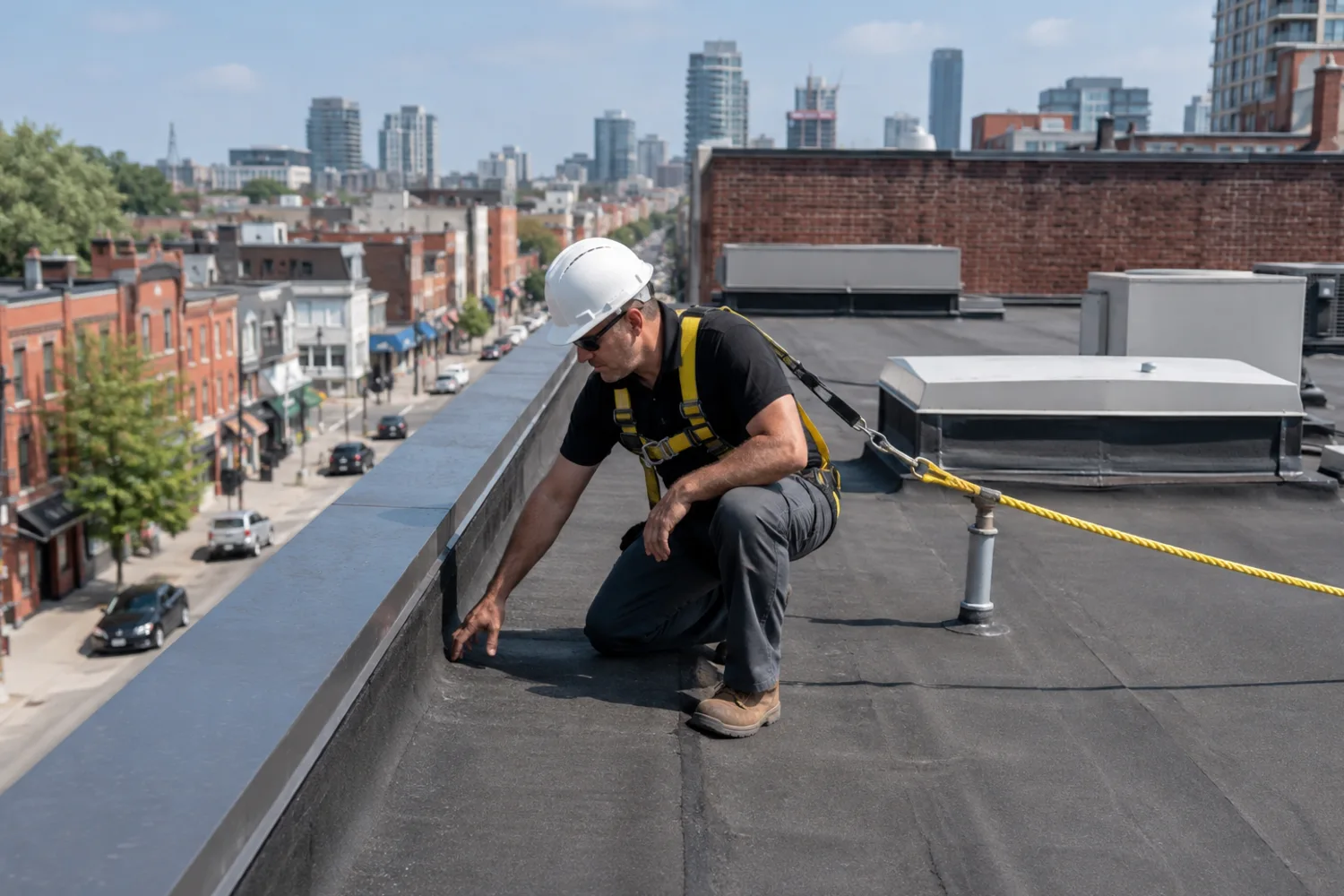
Dense sites turn logistics into part of the roof scope. A small membrane repair can require coordination for loading, ladders, occupants and public routes. The first conversation should therefore focus on the event, the affected roof zone and the conditions that can be described safely from inside or at ground level. Useful observations include flat or mixed roof zones, no private driveway for staging, roof access through occupied space, parapets and neighbouring walls. These details do not diagnose the roof on their own, but they help choose the right access method and inspection priorities.
The local intake should keep three categories separate: what the owner reported, what the assessor directly observed and what remains a working explanation. This distinction matters when water has travelled from an upper transition or when an inaccessible detail sits between the likely entry point and the visible interior mark. Any conclusion should match the access and weather conditions available that day.
03 / Downtown Toronto roofing
How the Toronto roof assembly is mapped before toronto work plan
A roof map divides the building into drainage zones rather than treating it as one surface. Main slopes, valleys, dormers, porches, rear additions, low-slope sections, parapets and adjoining walls can have different materials and ages. The map also marks vents, skylights, chimneys, drains, scuppers and changes in elevation because those points interrupt or concentrate the water path.
Confirm building use, access route, working-at-height plan and material movement before scheduling an inspection or project. Photographs should include wide context and close detail, with the location of each observation tied back to the map. When a roof zone cannot be reached safely, the report should state the limitation instead of presenting an assumption as a confirmed condition.
04 / Downtown Toronto roofing
Roofing Company Downtown Toronto: repair boundary versus broader replacement
Availability depends on building height, safe access and required vendor credentials; these are checked before a commitment. The surrounding material is part of the decision because new work must join an existing drainage plane. Brittle shingles, unidentified membrane, trapped moisture, repeated patching or deteriorated deck can expand the practical repair boundary even when the visible opening is small.
A responsible comparison describes the intended service life and limitations of each option without guaranteeing a lifespan that the inspection cannot support. If exploratory removal is needed, its size, price basis, authorization and temporary weather protection should be established before the roof is opened. That keeps the owner in control when concealed conditions become visible.
05 / Downtown Toronto roofing
Toronto weather and building conditions that affect roofing company downtown toronto
Downtown Toronto coverage is not a claim of immediate response or unrestricted high-rise capability. Rain direction, freeze-thaw timing and snow melt are useful diagnostic context, but weather alone does not prove why a component failed. The condition of fasteners, seams, flashings, underlayment, outlets and adjacent material must still support the proposed explanation.
Toronto buildings also vary in height, occupancy and age. A detached house with driveway access is not planned like a row house with a shared roof edge or a mixed-use building with public routes below. The service decision remains subject to confirmed roof-system capability, safe access, staffing and any property permissions required.
06 / Downtown Toronto roofing
What the area-specific proposal should include
The document should name the roof zones and quantities, removal limits, preparation, materials, fasteners or joining method, flashings, penetrations, drainage work and cleanup. Replacement scopes should also identify decking allowances, underlayment, eave protection, ventilation, waste handling and how the building will remain weather-tight during the sequence.
Known exclusions need equal visibility. Masonry, structural framing, electrical work, mechanical equipment, interior finishes, permits and neighbouring-property work should not be implied by a broad roofing label. Price, applicable taxes, payment stages, schedule assumptions and the signed change-order process belong in the final contract supplied by the verified operating company.
07 / Downtown Toronto roofing
Safe photos and information to send with a Toronto roofing request
Send the complete postal code, property type, approximate number of storeys, flat or sloped roof if known, the time and weather when the symptom appeared, and whether water is entering now. Ground-level roof views, fallen material and interior stains can help when they are photographed from a safe position. No owner or tenant should climb onto the roof to create intake photos.
Mention roof hatches, locked areas, dogs, tenant access, overhead wires, parking restrictions and any need to cross neighbouring property. If another contractor recently worked near the affected roof zone, include the work description and available records. Clear intake information reduces avoidable visits, but it does not confirm an appointment, final diagnosis, price or response time.
08 / Downtown Toronto roofing
Roofing Company Downtown Toronto: completion checks and future observations
Closeout should show what was removed, what concealed conditions were found, which changes were authorized and how the repaired or replaced layers reconnect to adjacent material. Relevant completion photos, product records and the written workmanship and manufacturer terms actually offered should be delivered without substituting marketing badges for documents.
Follow-up should match the original symptom. A rain-driven leak is best evaluated after comparable rain; a winter moisture pattern may require colder conditions. The owner should record any recurrence with date, weather and exact location. This does not create an unlimited guarantee, but it provides useful evidence for the next review and prevents the history from being reduced to memory. Keep the estimate, approved changes, material records and photographs together so another reviewer can understand the exact work boundary without reconstructing it from incomplete recollection.
Public guidance used for Toronto roofing decisions
Ontario advises consumers to use written roofing contracts and review contractor safety and insurance information. The City of Toronto states that replacing existing roofing material without structural work generally does not require a building permit, while structural or material alteration can. Check the current official guidance for the specific property and work.