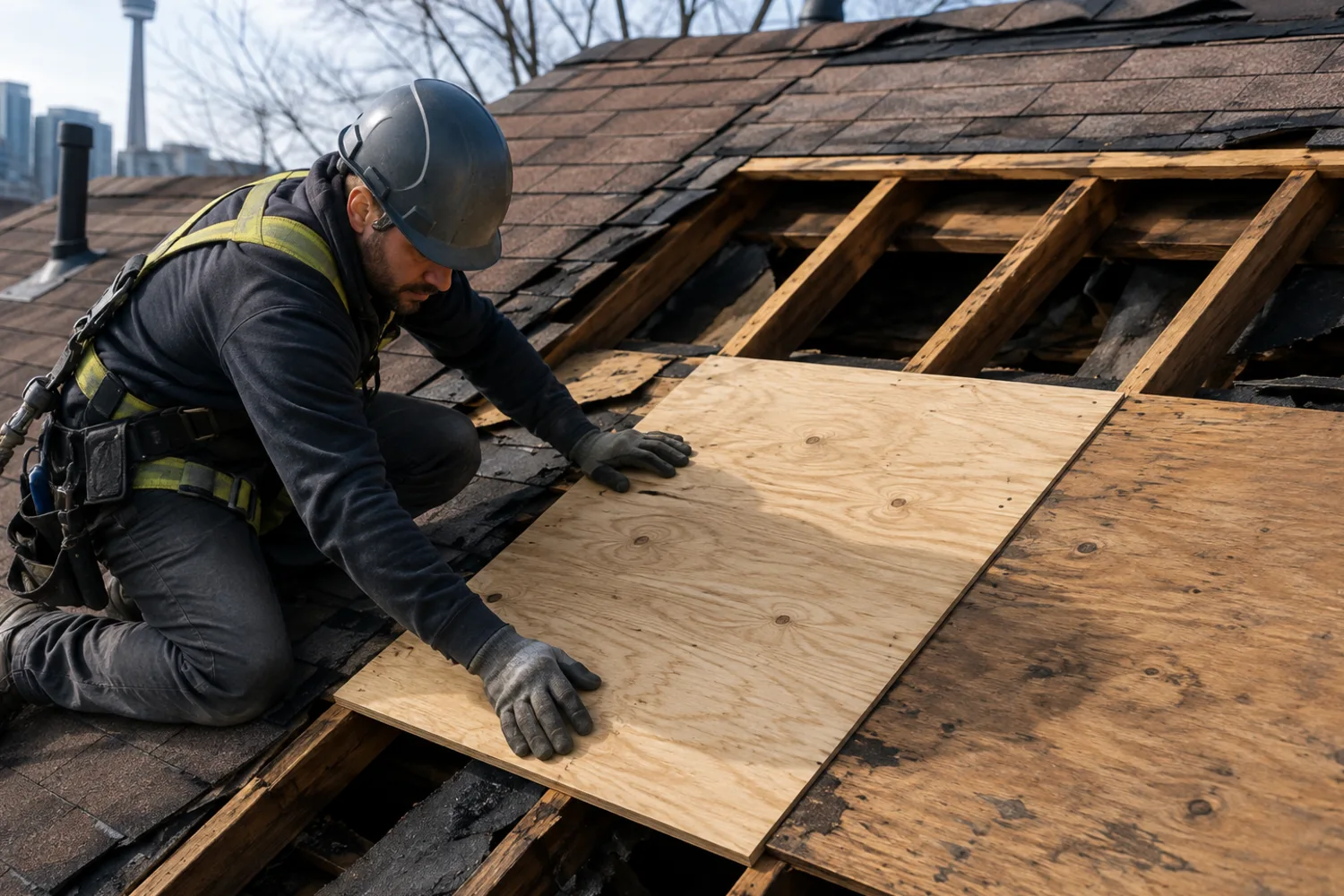
DECISION PRINCIPLE
Compare a bounded repair with broader replacement without turning uncertainty into pressure.
The guide keeps reported history, observed condition and inaccessible uncertainty separate. That gives a Toronto property owner a better basis for comparing repair or replacement scope without climbing onto the roof or accepting an unsupported promise.
01 / Repair or replace
Begin with the reported roof symptom
Record whether water followed rain, wind, snow melt or indoor humidity, and locate it relative to slopes, walls, valleys, drains and penetrations. This checkpoint belongs in a Toronto roofing decision because a roof is a connected drainage assembly, not an isolated visible product. The observation should be located on a roof-zone map and related to the weather event, interior symptom or project objective that started the request. That context keeps a general rule from being treated as a diagnosis for a particular building.
For checkpoint 1, separate evidence into three columns: owner-reported history, conditions directly observed and items that could not be verified. Photographs should show both context and detail, while notes identify roof slope, membrane or shingle field, edge, wall, valley, drain or penetration. If safe access, weather or finishes prevent confirmation, the limitation should remain visible in the report and estimate.
The commercial decision is to compare a bounded repair with broader replacement without turning uncertainty into pressure. That requires a written boundary for removal, preparation, new material, tie-ins and exclusions. It also requires a change process for concealed deck, wet insulation, hidden flashings or other conditions that only appear after opening. A proposal is more useful when the owner can see which fact supports each line of work.
02 / Repair or replace
Map failures by roof zone
Separate main slopes, porches, additions, dormers and flat sections because each zone can have a different age, material and drainage path. This checkpoint belongs in a Toronto roofing decision because a roof is a connected drainage assembly, not an isolated visible product. The observation should be located on a roof-zone map and related to the weather event, interior symptom or project objective that started the request. That context keeps a general rule from being treated as a diagnosis for a particular building.
For checkpoint 2, separate evidence into three columns: owner-reported history, conditions directly observed and items that could not be verified. Photographs should show both context and detail, while notes identify roof slope, membrane or shingle field, edge, wall, valley, drain or penetration. If safe access, weather or finishes prevent confirmation, the limitation should remain visible in the report and estimate.
The commercial decision is to compare a bounded repair with broader replacement without turning uncertainty into pressure. That requires a written boundary for removal, preparation, new material, tie-ins and exclusions. It also requires a change process for concealed deck, wet insulation, hidden flashings or other conditions that only appear after opening. A proposal is more useful when the owner can see which fact supports each line of work.
03 / Repair or replace
Test whether a repair can tie into sound material
A repair needs surrounding shingles or membrane that can be lifted, prepared and joined without creating new breaks. This checkpoint belongs in a Toronto roofing decision because a roof is a connected drainage assembly, not an isolated visible product. The observation should be located on a roof-zone map and related to the weather event, interior symptom or project objective that started the request. That context keeps a general rule from being treated as a diagnosis for a particular building.
For checkpoint 3, separate evidence into three columns: owner-reported history, conditions directly observed and items that could not be verified. Photographs should show both context and detail, while notes identify roof slope, membrane or shingle field, edge, wall, valley, drain or penetration. If safe access, weather or finishes prevent confirmation, the limitation should remain visible in the report and estimate.
The commercial decision is to compare a bounded repair with broader replacement without turning uncertainty into pressure. That requires a written boundary for removal, preparation, new material, tie-ins and exclusions. It also requires a change process for concealed deck, wet insulation, hidden flashings or other conditions that only appear after opening. A proposal is more useful when the owner can see which fact supports each line of work.
04 / Repair or replace
Look beyond the surface covering
Decking, underlayment, eave protection, flashings and ventilation can change the work even when the visible defect looks small. This checkpoint belongs in a Toronto roofing decision because a roof is a connected drainage assembly, not an isolated visible product. The observation should be located on a roof-zone map and related to the weather event, interior symptom or project objective that started the request. That context keeps a general rule from being treated as a diagnosis for a particular building.
For checkpoint 4, separate evidence into three columns: owner-reported history, conditions directly observed and items that could not be verified. Photographs should show both context and detail, while notes identify roof slope, membrane or shingle field, edge, wall, valley, drain or penetration. If safe access, weather or finishes prevent confirmation, the limitation should remain visible in the report and estimate.
The commercial decision is to compare a bounded repair with broader replacement without turning uncertainty into pressure. That requires a written boundary for removal, preparation, new material, tie-ins and exclusions. It also requires a change process for concealed deck, wet insulation, hidden flashings or other conditions that only appear after opening. A proposal is more useful when the owner can see which fact supports each line of work.
05 / Repair or replace
Use repair history as evidence, not an automatic verdict
Past work can identify a recurring interface, but the quality, location and compatibility of each repair must be reviewed. This checkpoint belongs in a Toronto roofing decision because a roof is a connected drainage assembly, not an isolated visible product. The observation should be located on a roof-zone map and related to the weather event, interior symptom or project objective that started the request. That context keeps a general rule from being treated as a diagnosis for a particular building.
For checkpoint 5, separate evidence into three columns: owner-reported history, conditions directly observed and items that could not be verified. Photographs should show both context and detail, while notes identify roof slope, membrane or shingle field, edge, wall, valley, drain or penetration. If safe access, weather or finishes prevent confirmation, the limitation should remain visible in the report and estimate.
The commercial decision is to compare a bounded repair with broader replacement without turning uncertainty into pressure. That requires a written boundary for removal, preparation, new material, tie-ins and exclusions. It also requires a change process for concealed deck, wet insulation, hidden flashings or other conditions that only appear after opening. A proposal is more useful when the owner can see which fact supports each line of work.
06 / Repair or replace
Compare remaining serviceability and disruption
A lower initial repair cost may be sensible, while repeated openings and short tie-in life can make broader work more practical. This checkpoint belongs in a Toronto roofing decision because a roof is a connected drainage assembly, not an isolated visible product. The observation should be located on a roof-zone map and related to the weather event, interior symptom or project objective that started the request. That context keeps a general rule from being treated as a diagnosis for a particular building.
For checkpoint 6, separate evidence into three columns: owner-reported history, conditions directly observed and items that could not be verified. Photographs should show both context and detail, while notes identify roof slope, membrane or shingle field, edge, wall, valley, drain or penetration. If safe access, weather or finishes prevent confirmation, the limitation should remain visible in the report and estimate.
The commercial decision is to compare a bounded repair with broader replacement without turning uncertainty into pressure. That requires a written boundary for removal, preparation, new material, tie-ins and exclusions. It also requires a change process for concealed deck, wet insulation, hidden flashings or other conditions that only appear after opening. A proposal is more useful when the owner can see which fact supports each line of work.
07 / Repair or replace
Write concealed conditions as allowances
Deck replacement and hidden flashing work should have units, prices and approval steps instead of appearing as an open-ended surprise. This checkpoint belongs in a Toronto roofing decision because a roof is a connected drainage assembly, not an isolated visible product. The observation should be located on a roof-zone map and related to the weather event, interior symptom or project objective that started the request. That context keeps a general rule from being treated as a diagnosis for a particular building.
For checkpoint 7, separate evidence into three columns: owner-reported history, conditions directly observed and items that could not be verified. Photographs should show both context and detail, while notes identify roof slope, membrane or shingle field, edge, wall, valley, drain or penetration. If safe access, weather or finishes prevent confirmation, the limitation should remain visible in the report and estimate.
The commercial decision is to compare a bounded repair with broader replacement without turning uncertainty into pressure. That requires a written boundary for removal, preparation, new material, tie-ins and exclusions. It also requires a change process for concealed deck, wet insulation, hidden flashings or other conditions that only appear after opening. A proposal is more useful when the owner can see which fact supports each line of work.
08 / Repair or replace
Plan Toronto access and neighbours
Semi-detached edges, narrow passages, street parking and mature landscaping affect both repair and replacement sequences. This checkpoint belongs in a Toronto roofing decision because a roof is a connected drainage assembly, not an isolated visible product. The observation should be located on a roof-zone map and related to the weather event, interior symptom or project objective that started the request. That context keeps a general rule from being treated as a diagnosis for a particular building.
For checkpoint 8, separate evidence into three columns: owner-reported history, conditions directly observed and items that could not be verified. Photographs should show both context and detail, while notes identify roof slope, membrane or shingle field, edge, wall, valley, drain or penetration. If safe access, weather or finishes prevent confirmation, the limitation should remain visible in the report and estimate.
The commercial decision is to compare a bounded repair with broader replacement without turning uncertainty into pressure. That requires a written boundary for removal, preparation, new material, tie-ins and exclusions. It also requires a change process for concealed deck, wet insulation, hidden flashings or other conditions that only appear after opening. A proposal is more useful when the owner can see which fact supports each line of work.
09 / Repair or replace
Ask for two clearly bounded options
Each option should state roof zones, removal, materials, exclusions, cleanup and what evidence would cause the scope to change. This checkpoint belongs in a Toronto roofing decision because a roof is a connected drainage assembly, not an isolated visible product. The observation should be located on a roof-zone map and related to the weather event, interior symptom or project objective that started the request. That context keeps a general rule from being treated as a diagnosis for a particular building.
For checkpoint 9, separate evidence into three columns: owner-reported history, conditions directly observed and items that could not be verified. Photographs should show both context and detail, while notes identify roof slope, membrane or shingle field, edge, wall, valley, drain or penetration. If safe access, weather or finishes prevent confirmation, the limitation should remain visible in the report and estimate.
The commercial decision is to compare a bounded repair with broader replacement without turning uncertainty into pressure. That requires a written boundary for removal, preparation, new material, tie-ins and exclusions. It also requires a change process for concealed deck, wet insulation, hidden flashings or other conditions that only appear after opening. A proposal is more useful when the owner can see which fact supports each line of work.
10 / Repair or replace
Make the decision after limitations are visible
A responsible recommendation explains inaccessible areas, weather limits and any need for exploratory removal or another specialist. This checkpoint belongs in a Toronto roofing decision because a roof is a connected drainage assembly, not an isolated visible product. The observation should be located on a roof-zone map and related to the weather event, interior symptom or project objective that started the request. That context keeps a general rule from being treated as a diagnosis for a particular building.
For checkpoint 10, separate evidence into three columns: owner-reported history, conditions directly observed and items that could not be verified. Photographs should show both context and detail, while notes identify roof slope, membrane or shingle field, edge, wall, valley, drain or penetration. If safe access, weather or finishes prevent confirmation, the limitation should remain visible in the report and estimate.
The commercial decision is to compare a bounded repair with broader replacement without turning uncertainty into pressure. That requires a written boundary for removal, preparation, new material, tie-ins and exclusions. It also requires a change process for concealed deck, wet insulation, hidden flashings or other conditions that only appear after opening. A proposal is more useful when the owner can see which fact supports each line of work.
Toronto and Ontario sources to verify before roofing work
Permit requirements and consumer rules can change. Review the current City of Toronto building-permit guidance and Ontario information about hiring roofers and written renovation contracts. The property owner remains responsible for confirming project-specific requirements.
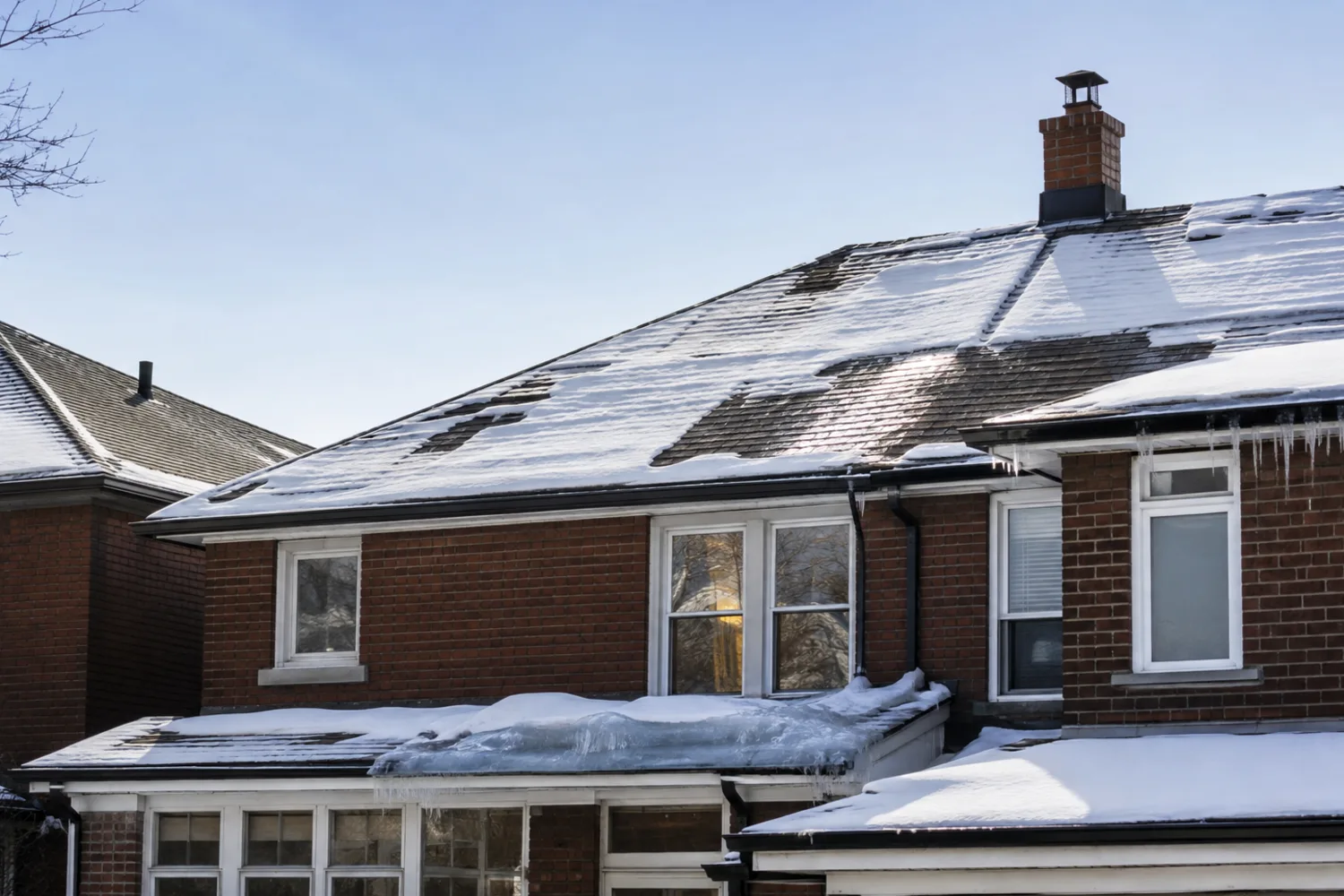 Roof Repair Toronto
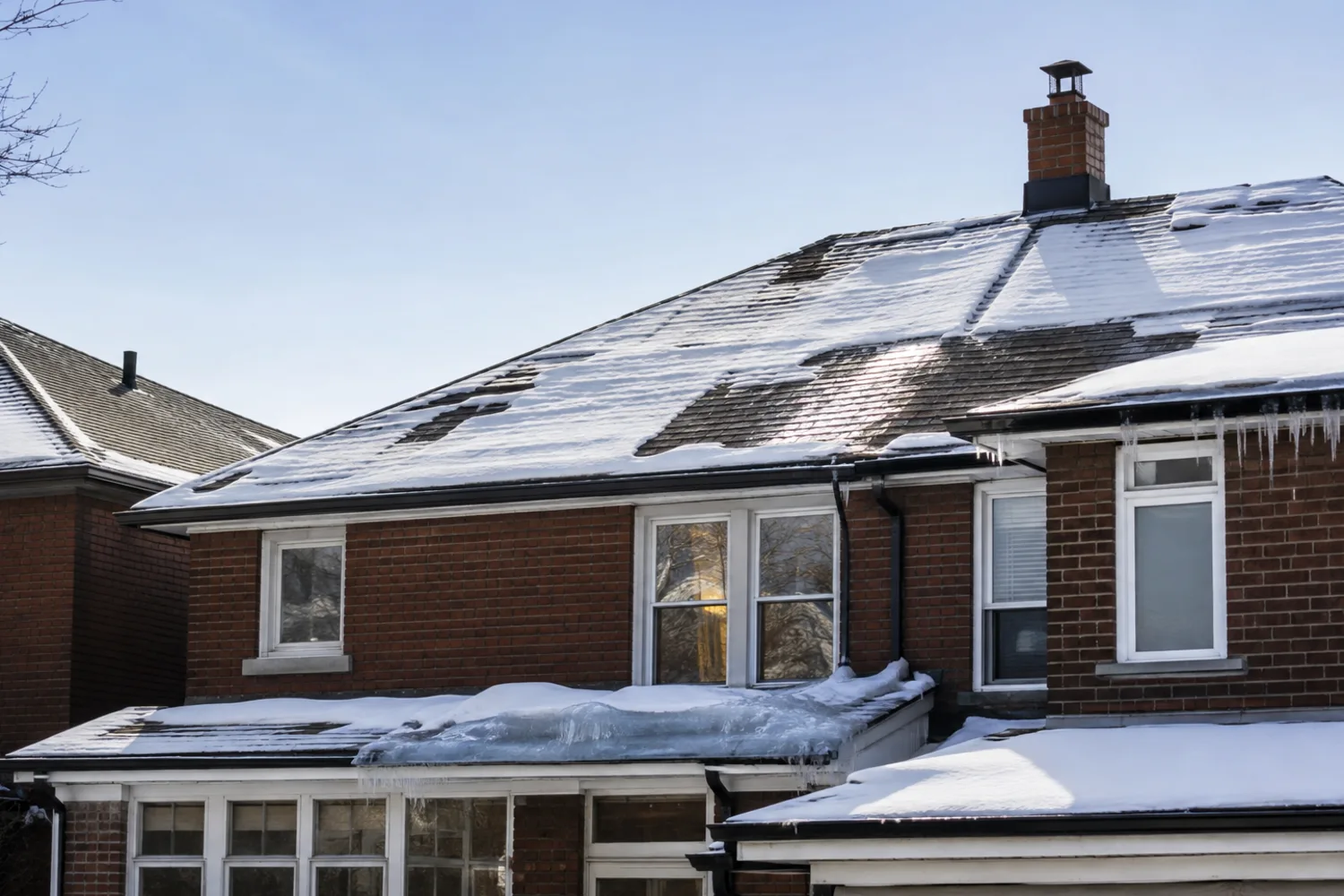 Roof Replacement Toronto
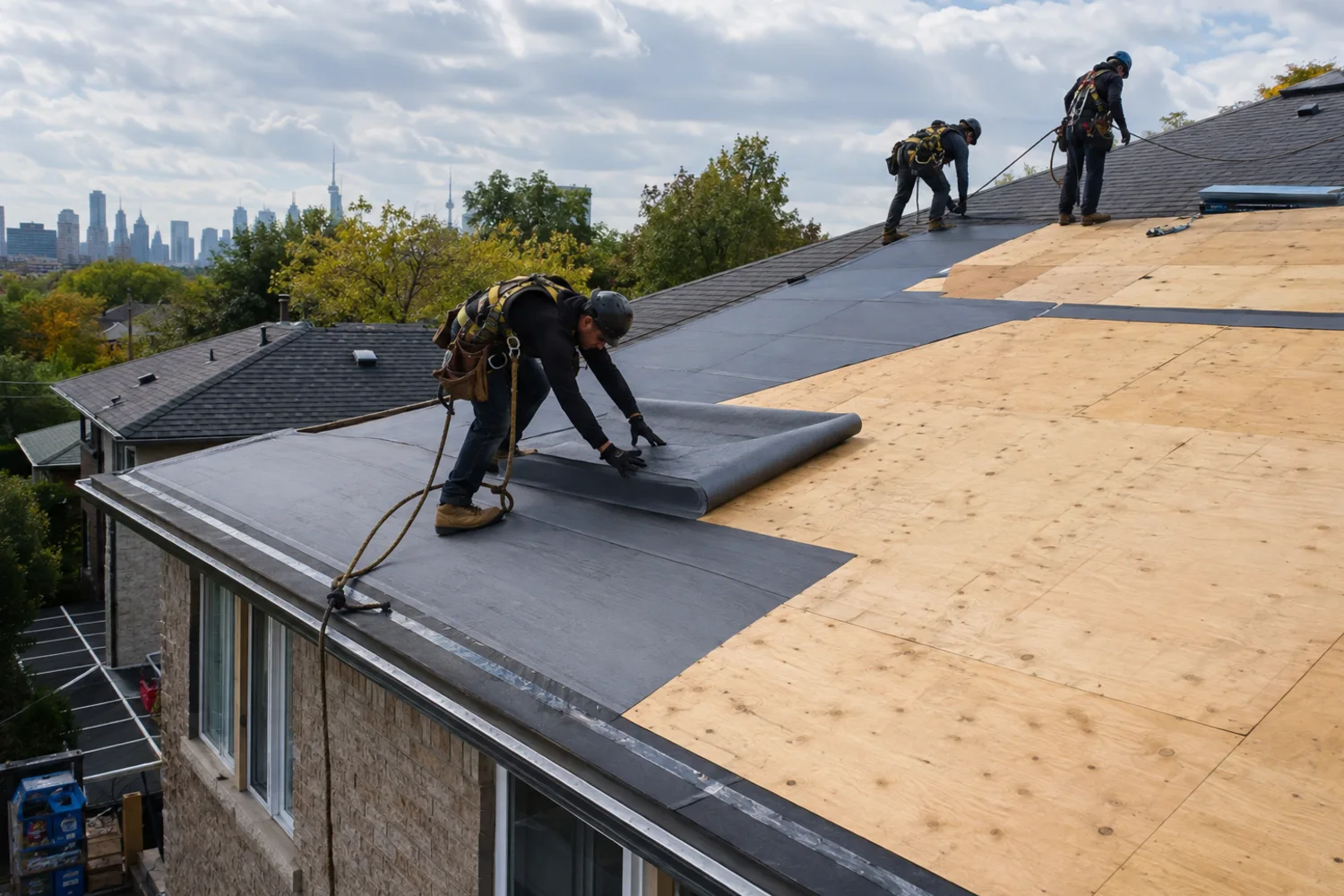 Roof Decking & Underlayment Toronto